
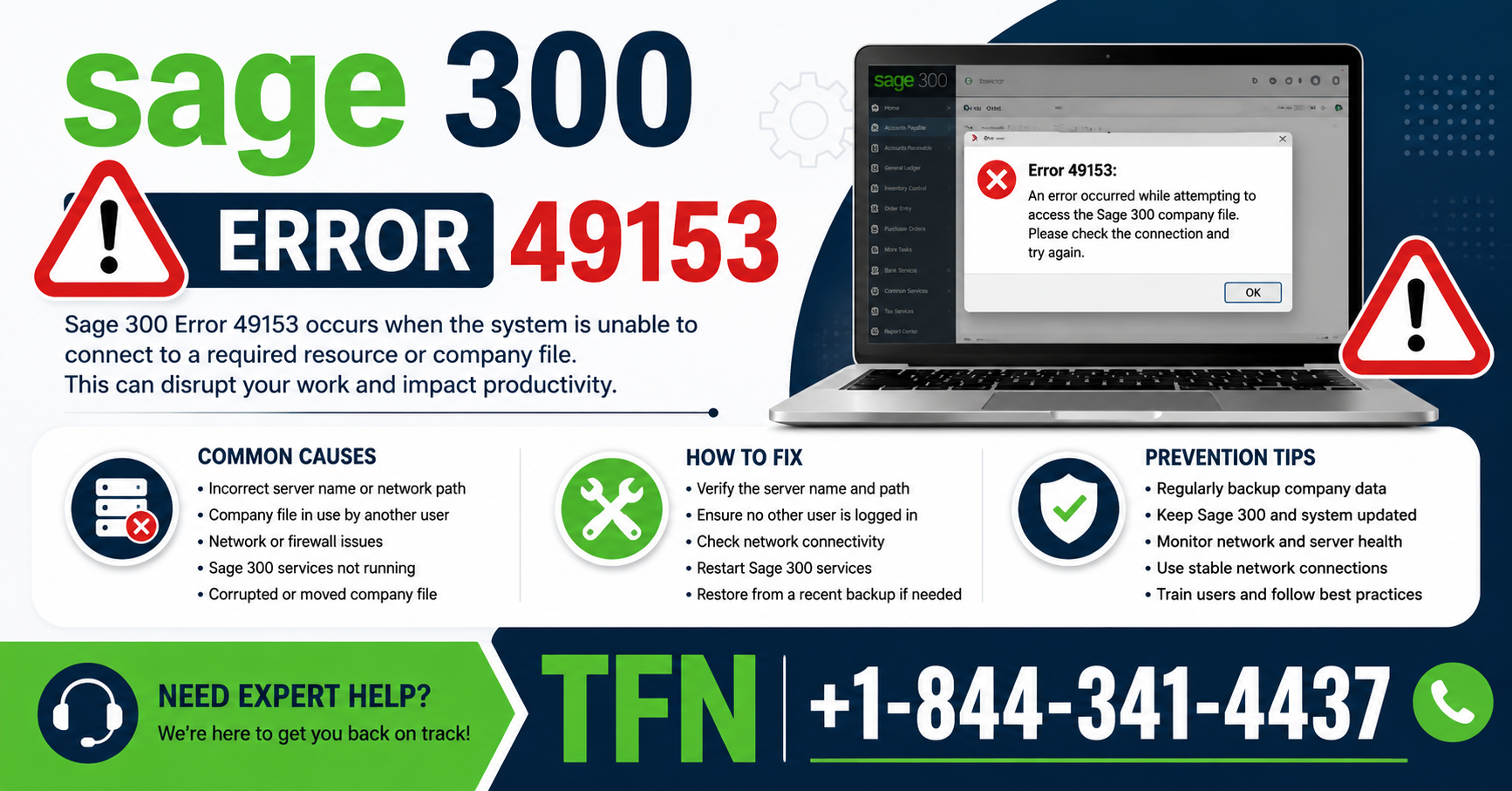
If you are Getting 49153 Error When Connecting To Sage 300 +1 (844) 341-4437 or 1-800-446-8848, you are not alone. Many businesses encounter this issue while attempting to access company data through Sage 300. The error typically appears when the application cannot establish communication with the database server, preventing users from logging into the system. Understanding the reasons behind this problem and applying the correct troubleshooting methods can help restore access quickly and prevent future interruptions.
Understanding Sage 300 Login Error 49153 Cannot Access Database
The message Sage 300 Login Error 49153 Cannot Access Database indicates that Sage 300 is unable to connect to the database that stores company information. Since Sage 300 relies heavily on database communication for processing accounting transactions, inventory records, payroll information, and financial reports, any interruption in connectivity can trigger this error.
This issue may occur suddenly after a system update, network modification, database migration, or server restart. In some situations, users may notice that only specific workstations experience the problem while others continue working normally.
What Does Error 49153 Mean in Sage 300?
Database Error 49153 in Sage 300 is generally associated with communication failures between the Sage 300 workstation and the SQL database server. When Sage cannot locate or authenticate the database connection, it displays the error and blocks access to company files.
The problem can arise because of:
- Incorrect database settings
- SQL Server service issues
- Damaged ODBC configuration
- Network interruptions
- Firewall restrictions
- Corrupted workstation installation
- Database permission problems
Understanding the source of the issue is essential before applying a solution.
Common Symptoms of Sage 300 Error 49153
Organizations experiencing sage 300 error 49153 often report the following symptoms:
- Users cannot log into Sage 300
- Database connection fails unexpectedly
- Company data does not load
- Login screen repeatedly appears
- Database timeout messages occur
- Workstations disconnect from the server
- SQL authentication errors appear
These symptoms typically indicate a communication problem between Sage 300 and the database environment.
Main Causes Behind Sage 300 Cannot Access Database Error 49153
Several technical factors can contribute to sage 300 cannot access database error 49153.
Database Server Unavailable
If the SQL Server hosting Sage data is offline or stopped, Sage cannot establish communication.
Incorrect SQL Instance Name
A wrong server name or instance configuration can prevent successful authentication.
Network Connectivity Problems
Temporary network failures often interrupt communication between the workstation and the database server.
Firewall Restrictions
Windows Firewall or third-party security software may block required database ports.
ODBC Configuration Issues
An incorrect ODBC Data Source Name (DSN) can result in connection failures.
Database Permission Errors
If user permissions have changed, Sage may lose access to required database resources.
Corrupted Sage Components
Damaged workstation files can generate database connectivity errors.
How to Verify SQL Server Services
One of the first troubleshooting steps for Getting 49153 Error When Connecting To Sage 300 is verifying SQL services.
Check SQL Service Status
- Open Services on the server.
- Locate SQL Server services.
- Verify they are running.
- Restart services if necessary.
- Attempt to log into Sage again.
If SQL services are stopped, restarting them often restores database access.
Review Database Connection Settings
Incorrect connection settings frequently contribute to sage cannot access database error 49153.
Verify the Following Information
- SQL Server name
- Instance name
- Database name
- Authentication settings
- ODBC configuration
A simple typo in server information can prevent Sage from locating the database.
Test Network Communication
Network instability is another common cause of Fix Sage ACCPAC Error 49153 situations.
Perform Connectivity Tests
- Ping the database server.
- Verify server accessibility.
- Check VPN connections if remote users are involved.
- Confirm DNS resolution.
- Review network switch status.
Reliable network communication is essential for Sage 300 database operations.
Check Firewall and Security Settings
Firewalls can unintentionally block SQL Server communication.
Review Security Configuration
- Windows Firewall rules
- Antivirus network protection
- Endpoint security policies
- SQL port accessibility
Allowing appropriate database traffic can resolve connection failures immediately.
Verify ODBC Configuration
ODBC serves as a bridge between Sage 300 and SQL Server.
Inspect ODBC Settings
- Open ODBC Data Source Administrator.
- Locate Sage-related DSN entries.
- Confirm server information.
- Test database connectivity.
- Save corrected settings if needed.
Many instances of Database Error 49153 in Sage 300 originate from incorrect ODBC configurations.
Examine User Permissions
Changes to database security settings can trigger login failures.
Check SQL Permissions
- Database access rights
- User roles
- Authentication methods
- Security policies
Users must have appropriate permissions to access Sage company databases successfully.
Reconfigure Workstation Installation
Sometimes the problem exists only on a specific workstation.
Recommended Steps
- Repair Sage installation.
- Reinstall workstation components.
- Update Sage workstation setup.
- Verify shared data paths.
- Test database access after installation.
These actions often help resolve workstation-specific instances of sage error 49153.
Confirm Database Integrity
A damaged database can prevent successful connections.
Database Health Checks
- Run database consistency checks.
- Review SQL logs.
- Examine database status.
- Verify backup integrity.
- Check for corruption indicators.
Database maintenance helps reduce connectivity-related issues.
Best Practices to Prevent Error 49153
Organizations can minimize future occurrences of Sage 300 Login Error 49153 Cannot Access Database by implementing preventive measures.
Maintain Regular Backups
Frequent backups protect company data and simplify recovery efforts.
Monitor SQL Server Performance
Regular monitoring identifies issues before they affect users.
Keep Sage 300 Updated
Current updates often include fixes related to database communication and performance.
Review Network Infrastructure
Stable network connectivity is critical for database-dependent applications.
Audit Security Policies
Periodically verify firewall and permission settings to ensure uninterrupted access.
When Multiple Users Experience the Error
If several users receive Getting 49153 Error When Connecting To Sage 300, the issue is likely server-side rather than workstation-specific.
Administrators should focus on:
- SQL Server health
- Database availability
- Network status
- Authentication settings
- Server resources
Addressing these areas usually resolves widespread login failures.
Why Immediate Troubleshooting Matters
Ignoring sage 300 cannot access database error 49153 can impact daily business operations significantly. Financial reporting, invoicing, payroll processing, inventory management, and customer transactions may become inaccessible until database connectivity is restored.
Prompt diagnosis reduces downtime and helps maintain business continuity.
Final Thoughts
Organizations encountering Getting 49153 Error When Connecting To Sage 300 +1 (844) 341-4437 or 1-800-446-8848 should begin by reviewing database connectivity, SQL Server services, ODBC configuration, network communication, and user permissions. Most cases of Sage 300 Login Error 49153 Cannot Access Database, Fix Sage ACCPAC Error 49153, Database Error 49153 in Sage 300, sage 300 error 49153, sage error 49153, sage 300 cannot access database error 49153, and sage cannot access database error 49153 can be resolved through systematic troubleshooting. If additional assistance is needed with diagnosis or recovery procedures, guidance is available at +1 (844) 341-4437 or 1-800-446-8848 to help restore access and ensure smooth database operations.